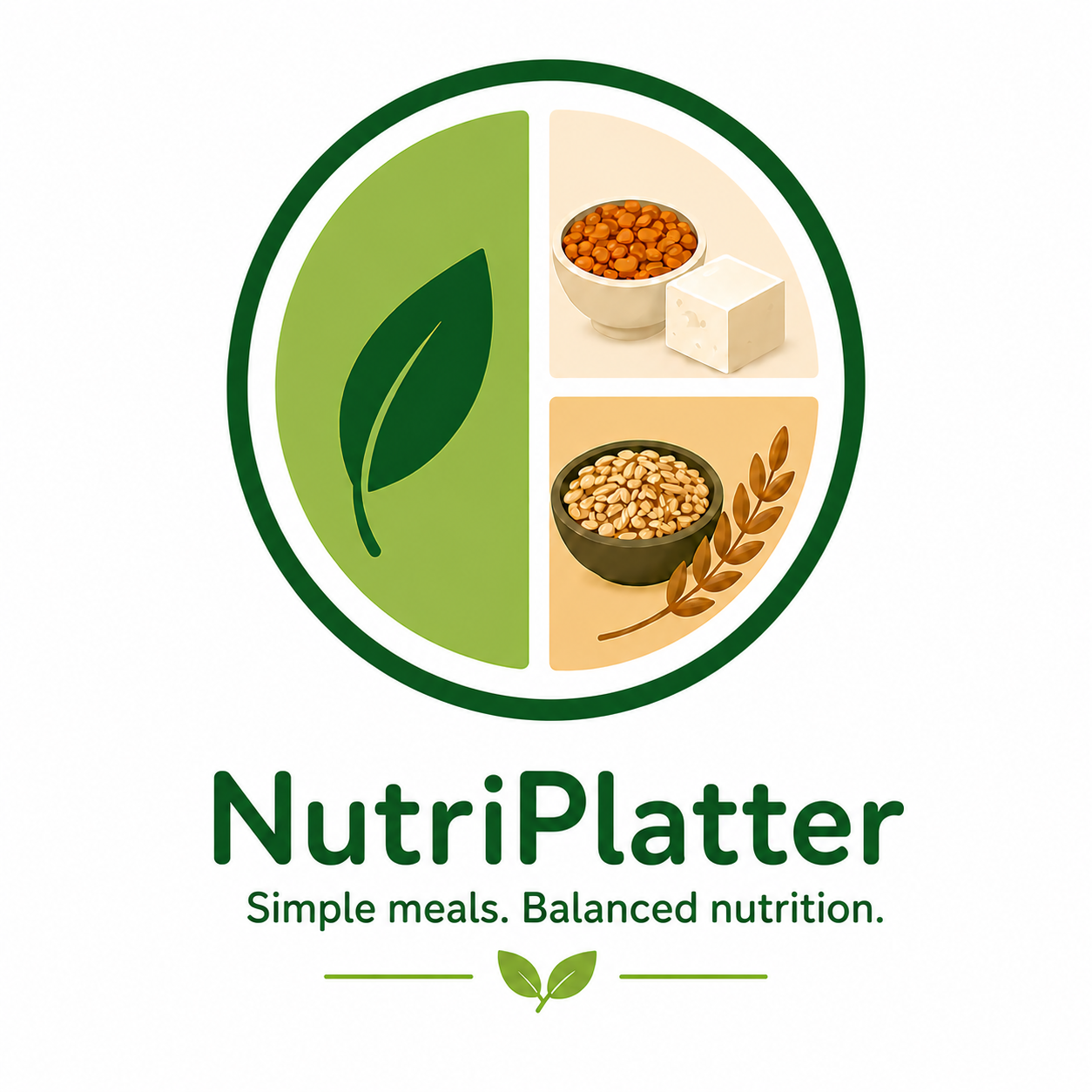
What is a Balanced Plate?
A balanced plate is a visual framework that translates complex nutritional guidelines into an easy, real-world layout to portion your meals. Instead of weighing ingredients or parsing every calorie, you can look at your plate and structure it geometrically to hit your target nutrient zones using natural plant-based choices.
🥦 1/2 Non-Starchy Veggies
This half fills your plate with essential vitamins, active minerals, and rich dietary fibers while maintaining a very light, health-conscious calorie density.
🫘 1/4 Vegetarian Protein
Instead of relying on animal meats, this quarter uses dynamic plant and dairy alternatives to secure amino acids for muscle tissue recovery and lasting fullness.
🌾 1/4 Complex Carbs
This final sector provides stable glycogen and glucose energy to sustain brain focus and physical endurance without triggering insulin spikes.
Why Structure Meals This Way?
- Satiety and Fullness: Pairing clean vegetarian fibers, slow-burning starches, and protein amino acids delays stomach clearing, keeping your daily appetite comfortably regular.
- Blood Sugar Regulation: Combining plant fibers and accent lipids slows down macro digestion, which prevents the rapid glucose spikes and energy crashes common in high-carb eating.
- Effortless Portion Control: Organizing portions geometrically keeps calories in check automatically, removing the need to log items into tracking applications.
- Guaranteed Micronutrients: Filling a full half of your dinner plate surface with a colorful garden spectrum ensures your cells receive abundance of vital antioxidants and enzymes.
The Healthy Accent Rule
Complete your vegetarian plate blueprint by adding a small, thumb-sized serving of wholesome unrefined lipids. This accent layer satisfies your body's essential fatty acid requirements and acts as a lipophilic catalyst for vitamin processing.
How to Build a Balanced Vegetarian Plate
Mix, match, and alternate high-tier plant elements across columns to construct complete nutritious meals:
Want to calculate macronutrients based on your metrics?
Find your Carbs, Protein, Fats, & Fiber limits →Adapting Mixed Vegetarian Frameworks
This layout model is highly flexible and adapts beautifully to multi-ingredient single pot recipes like vegetable stir-fries, warm chickpea curries, bean chilis, or hearty lentil soups. When assembling mixed dishes, simply conceptualize the total volume ratios: aim for half the recipe contents to stem from unrefined vegetables, a quarter from clear protein blocks (like tofu, paneer, or eggs), and a quarter from a wholesome complex carbohydrate grain base.
Practical Tips for Everyday Success
Start with the Greens First: Fill up your vegetable half with fresh leafy salads or roasted garden options before serving any other macro components onto your plate surfaces.
Keep an Eye on Sauces: Store-bought dressings and creamy commercial toppings often harbor heavy hidden sugars and refined oils. Try making your own plant-based dressings using olive oil, tahini, and fresh lemon juice.
Choose Smart Volume Swaps: Instead of simple processed white starches, try blending cauliflower rice directly into unrefined brown rice or quinoa to increase meal fiber levels easily.
Listen to Satiety Cues: Practice mindful eating principles and pause when you feel comfortably full and satisfied, rather than forcing yourself to clean the plate out of habit.
Batch Prep Plant Proteins: Cube your tofu, simmer your lentils, and hard-boil your eggs ahead of time so building a visual, balanced vegetarian plate takes just minutes on busy weeknights.